
The Blanco-Fabretti Case
The Court of Justice of the European Union ruling that changed how gambling winnings are taxed in Italy.
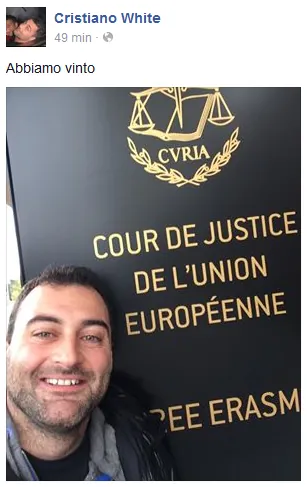
The Facts
- •Between 2007 and 2009, Cristiano Blanco won prizes at poker tables in casinos legally licensed in several EU Member States (France, Slovenia, Austria, the United Kingdom, the Netherlands), as well as in the Principality of Monaco (non-EU country).
- •These winnings were obtained in regulated European gaming houses, duly authorised in their respective countries and therefore subject to local rules.
- •The Italian Revenue Agency challenged the failure to declare such income in the RL section of the Italian tax return, under Article 67(d) of the TUIR, applying ordinary IRPEF taxation to foreign winnings.
- •The total amount claimed (tax, penalties and interest) exceeded €660,000, exposing the entrepreneur to a legal battle with uncertain outcome.
- •A similar dispute was raised against Pier Paolo Fabretti for winnings obtained in other European casinos. The two cases were joined by the Provincial Tax Commission of Rome and referred to the CJEU as a preliminary question.
The Preliminary Question
The Italian court asked the Court of Justice whether national legislation that taxes winnings obtained in gaming houses of other Member States — while exempting those obtained in national gaming houses — is compatible with Articles 52 and 56 TFEU (Art. 56: freedom to provide services; Art. 52: possible derogations for reasons of public policy, public security or public health) and with the principle of non-discrimination.
The Ruling
Date
22 October 2014
Chamber
Third Chamber, CJEU
Cases
C-344/13 and C-367/13 (joined)
Seat
Luxembourg
The Court of Justice of the European Union ruled that Articles 52 and 56 TFEU must be interpreted as precluding legislation of a Member State which subjects to income tax winnings from gaming houses in other Member States while exempting from that tax similar winnings from gaming houses in its national territory.
Italian tax law was declared incompatible with EU law.
The Consequences
The ruling had immediate and long-lasting effects on the Italian legal system:
- Italy was required to disapply the domestic rule to the extent it was incompatible with EU law.
- All tax assessments based on the taxation of gambling winnings obtained in other EU States were overturned.
- Refund opportunities opened for taxpayers who had already paid tax on EU foreign winnings.
- A key principle was established: the freedom to provide services applies to the regulated gaming sector as well.
- The case became a precedent in matters of tax non-discrimination between operators and citizens of different Member States.
A Personal Battle, a Collective Outcome
For Cristiano Blanco it was a battle lasting more than four years, lived under the pressure of a potentially devastating tax debt and with severely limited professional operations. A story that led him to leave Italy in 2011 and rebuild his career first in London, then in Dublin and finally in Malta.
The result, however, goes beyond the personal dimension: today any Italian citizen who wins gambling prizes in another licensed EU gaming house is not subject to taxation in Italy — a principle established in part thanks to this ruling.